

August 30, 2026
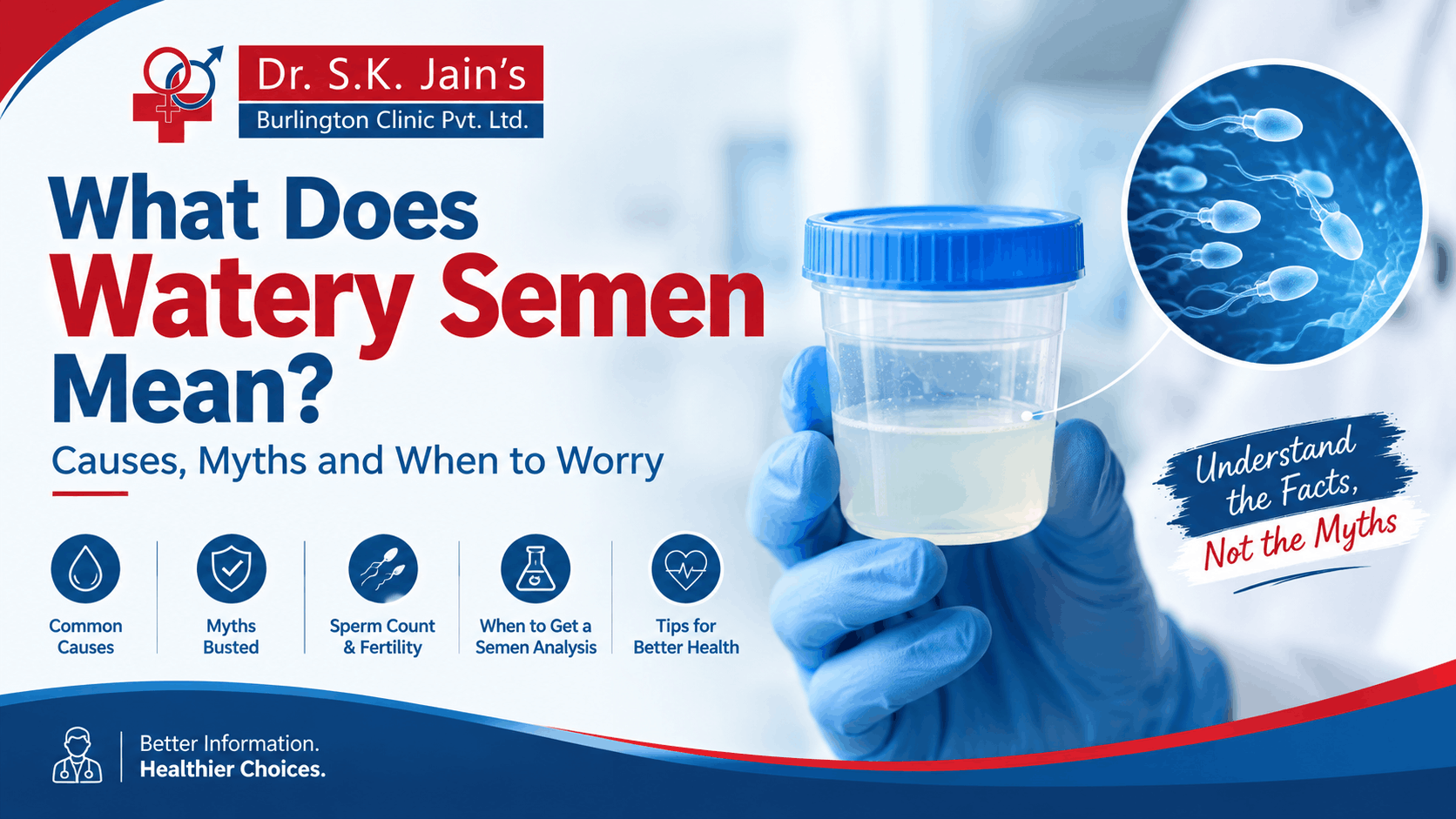
What Does Watery Semen Mean? Causes, Myths, and When to Worry
Semen that looks thinner or more see-through than usual is enough to make most men pause for a second, especially when it happens for the first time. Watery semen is one of those changes that feels significant just because it is visible. Still, most of the causes behind it turn out to be completely harmless.
The consistency of the semen naturally shifts based on hydration, how recently you last ejaculated, and even diet. In simple words, a single watery episode rarely means anything on its own. The key is to determine whether the change is occasional or persistent, and whether it comes with any other symptoms.
This blog explores what men should know about watery semen, along with its causes, myths, and when to worry.
What Is Semen, really?
Before we understand watery semen, it is important to understand what semen really is.
Semen, in simple terms, is the fluid released during ejaculation that carries sperm out of the body. But sperm cells only make up a tiny fraction of it, usually somewhere between 1% and 5% of the total volume.
So what is semen made of, then? It is mostly a mix called seminal plasma, produced by the seminal vesicles and prostate gland. This fluid carries fructose for energy, enzymes, zinc, citric acid, and proteins. These components are known to support and protect sperm on their way through the reproductive tract.
Semen typically appears thick and slightly gel-like right after ejaculation. It then liquefies within 15 to 30 minutes due to enzyme activity. This natural liquefaction is normal and shouldn’t be confused with semen that is watery from the start.
What Causes Watery Semen?
The most common causes of watery semen are linked to something simple, not a medical problem.
Watery semen causes typically fall into two categories:
Lifestyle-related
Less commonly, medical
When we talk about the lifestyle side, frequent ejaculation is the most common reason. Each ejaculation temporarily depletes the proteins and fluid that give semen its thicker texture. This means that shorter gaps between sessions often cause thinner-looking semen the next time.
Dehydration is another because it works the same way. Semen is largely water-based, and not drinking enough water can make it appear more diluted than usual.
Then comes diet, which also plays a role, particularly a lack of zinc, as it is directly linked to semen consistency.
In a nutshell, if you are searching for why my semen is watery specifically after a stretch of frequent sex or masturbation, then there is nothing to worry about. It typically resolves within a day or two of normal activity.
The medical side, on the other hand, has some causes worth paying attention to. Low testosterone can reduce how much seminal fluid the body produces. Certain infections, like prostatitis or STIs such as chlamydia, can also thin out semen consistency. Alongside, chronic medical conditions like diabetes and thyroid imbalances have also been found to be linked to this. However, these cases are far less common than the everyday lifestyle causes above.
Common Myths About Watery Semen
There are some common myths that don’t really hold up once you look closer.
Watery semen automatically means low sperm count or poor sperm quality is one of the most common beliefs. But that is not always true. Undeniably, semen consistency and sperm concentration are related, but one doesn’t confirm the other without an actual test.
Another common myth that raises concern among men is that watery semen means infertility. That is also not true; in reality, watery semen on its own doesn’t cause infertility. If it happens to reflect a genuinely low sperm count or reduced motility, those specific factors affect fertility, not the watery appearance itself. Noticing thinner semen after frequent sex is completely normal, and it means nothing beyond that.
One belief also says that watery semen signals a serious illness. In most cases, it is tied to something simple and lifestyle-related, such as ejaculation frequency or hydration, not a disease. The key is to notice if persistent changes are paired with other symptoms that are important to note.
Semen Retention: Does It Actually Change Semen Consistency?
Semen retention is known as the practice of avoiding ejaculation for extended periods. Most people assume that semen retention and semen consistency are directly connected. No doubt, the logic makes sense on the surface: if frequent ejaculation thins out semen, does abstaining thicken it back up?
To some extent, yes. Longer gaps between ejaculations do allow seminal fluid and sperm concentration to build back up. This is what can result in a thicker consistency the next time.
This is also known as one of the few claimed benefits of semen retention. Some studies have shown increased semen volume and sperm concentration after several days of abstinence.
Is There a Cure for Watery Semen?
There is no single watery semen cure. This is because, in most cases, the issue doesn’t stem from an actual condition that needs treatment. Making a few changes can make a real difference.
Keeping yourself hydrated is one of the simplest fixes, as semen is largely water-based and dehydration is one of the common contributors to thinner consistency. Avoiding ejaculation multiple times daily and spacing it out by a day or two also gives the body time to restore seminal fluid and sperm concentration. Intaking enough zinc in your diet is also non-negotiable. You can find it in foods like eggs, nuts, and seafood. It also supports healthier production over time.
Now, if it is developed due to an actual medical cause, like low testosterone or an infection, it is crucial to treat the underlying condition.
When to Actually Get a Semen Analysis?
Do not worry about seeing a single watery episode after a busy weekend. It is not a reason to book a test. It is worth getting a semen analysis when the change is persistent; moreover, if it comes with other noticeable symptoms, such as pain during ejaculation, a visible drop in volume, unusual color, or difficulty conceiving after a year of trying.
This analysis helps check sperm count, motility, morphology, and volume. This gives a full picture instead of relying on how the sample looks.
Conclusion
Watery semen is usually nothing more than a normal reflection. This reflects how often you have ejaculated, how hydrated you are, or what you have been eating lately. In most cases, it resolves on its own within a day or two without any intervention at all.
Still, exceptions such as persistent changes, pain, unusual color, or ongoing fertility struggles are worth paying attention to. These are the situations where an actual semen analysis is far more useful than guessing based on appearance alone.


Leave a Reply