

September 5, 2026
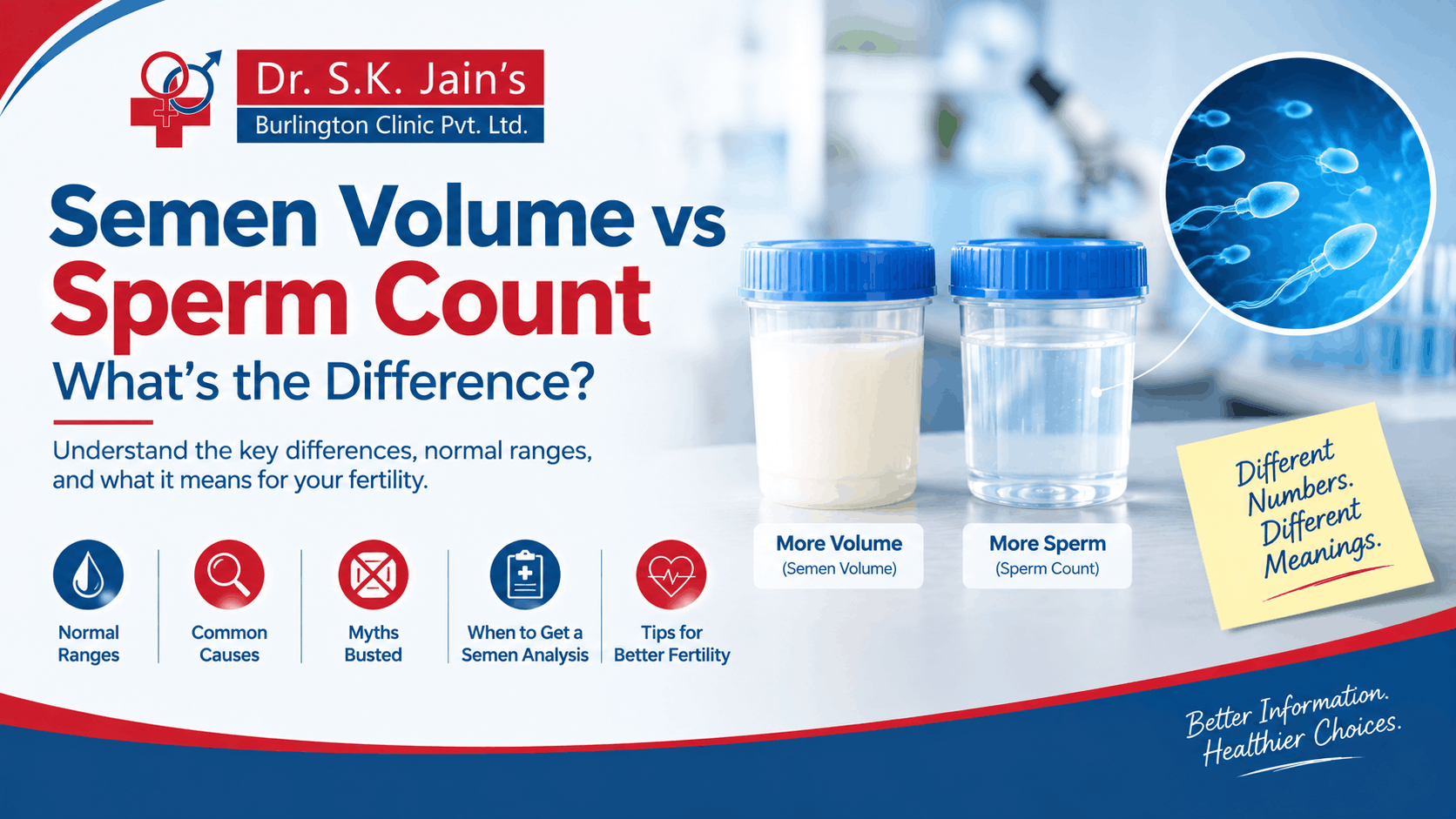
Semen Volume vs Sperm Count
Reading a semen analysis report can feel confusing as it lists several different numbers that seem like they should all mean the same thing. But actually, they don’t. Semen volume and sperm count are two of those numbers that often create the confusion. These are two separate measurements. Mixing them up is one of the more common mistakes men make when reading their own results.
- Semen volume is the amount of fluid released during ejaculation.
- Sperm count, on the other hand, is the number of actual sperm cells present in that fluid.
It is possible to have normal volume with a low sperm count and vice versa. The key is to understand semen volume vs sperm count to make the rest of a semen analysis report make more sense.
This blog explores the differences between semen volume and sperm count.
What Is Semen Volume?
It refers to the total amount of fluid released during ejaculation. It mostly comes from the seminal vesicles and prostate gland, not the testicles. This is the reason why volume and sperm count don’t always move together.
According to the WHO, the normal semen volume is generally 1.5 mL or higher per ejaculation. Most men produce somewhere between 1.5 and 5 mL. The average semen volume tends to land around 3 to 3.9 mL. It can vary from individual to individual depending on hydration, abstinence period, and overall health.
Fertility is not really linked to volume. It just tells you how much fluid was produced.
What Is Sperm Count?
In contrast, sperm count refers to the actual number of sperm cells present in an ejaculate. It is produced continuously in the testes through a process that takes roughly 64 to 72 days. Sperm count is completely separate from semen volume, as it counts cells, not fluid.
WHO says the normal sperm count starts at around 39 million sperm per ejaculate, or 15 million per milliliter of semen.
Sperm count in healthy men can range anywhere from this lower threshold up to 200 million or more per milliliter. Several factors such as age, health, and ejaculation frequency can affect the count naturally.
Semen Volume vs Sperm Count: The Key Difference
Put side by side, the difference between the two becomes much easier to follow.
| Particulars | Semen Volume | Sperm Count |
| What it measures |
Total fluid released during ejaculation |
Total number of sperm cells in that fluid |
| Comes from |
Seminal vesicles and prostate gland |
Testes |
| Normal range |
1.5 mL to 5 mL |
39 million or more per ejaculate |
| Can be normal even if the other is low? |
Yes |
Yes |
| What low value may indicate |
Blockage, retrograde ejaculation, short abstinence |
Hormonal issues, health conditions, testicular problems |
Normal Ranges for Both
If you are looking to understand the normal sperm count range and volume together, it requires you to look at a few connected numbers rather than a single figure. Here is how the sperm count test normal range breaks down:
According to WHO standards:
- Semen volume: 1.5 mL to 5 mL per ejaculation.
- Sperm concentration:15 million or more per milliliter.
- Total sperm count normal range: 39 million or more per full ejaculate.
- Motility: At least 40% of sperm should show movement.
- Morphology: At least 4% should have normal shape and structure.
Signs and Symptoms of Low Sperm Count
There is no obvious physical symptom that indicates low sperm count. A semen analysis is important for men to find out. Still, there are a few low sperm count signs worth paying attention to.
The most common symptoms of low sperm count include:
- Reduced sex drive
- Difficulty getting or maintaining an erection
- Pain, swelling, or a noticeable lump around the testicles
- Abnormal breast growth (a possible sign of hormone imbalance)
-
Decreased facial or body hair (may point to a testosterone-related issue)
Yet, none of the above-mentioned symptoms confirm low sperm count on their own. Even men with completely normal counts can experience one or two of them for unrelated reasons. Having a semen analysis is one of the most reliable ways to actually know the reason behind the lower sperm count.
What Causes Low Semen Volume?
A few different factors can cause low semen volume. The sources can range from something as simple as timing to more specific medical causes.
A few of the common and non-medical reasons are:
- Short abstinence periods before ejaculation
- ehydration
- Frequent ejaculation in a short p of time
Medically, retrograde ejaculation is considered one of the known causes of low volume. This is the condition in which semen flows backward into the bladder instead of exiting normally. Other conditions such as partial or complete blockage in the ejaculatory ducts, hormonal imbalances (particularly low testosterone), and prior surgery in the pelvic region can also reduce how much fluid is produced.
The key is to understand that a single low reading is not a cause for concern on its own in most cases. To come to real conclusions, doctors typically ask for a repeat sample under controlled conditions, usually after two to five days of abstinence.
How to Improve Both Naturally?
For men looking to increase sperm count or semen volume, lifestyle changes tend to make more of a difference than most people expect, especially when followed with a few months of consistency.
The following are a few things that support sperm count:
- Maintain a healthy weight. This is because obesity is linked to hormonal imbalances that affect sperm production.
- Intake enough zinc and antioxidants through diet. They are both tied to healthier sperm production.
- Avoid prolonged heat exposure, saunas, hot tubs, and tight underwear.
- Limit alcohol and quit smoking. They can both reduce sperm quality over time.
- Manage stress properly. Because chronically high cortisol can interfere with hormone balance.
Now, for those men who are searching for how to increase semen volume, staying well hydrated matters more than they realize. This is because semen is largely water-based.
Avoiding very frequent ejaculation, roughly every one to two days rather than multiple times daily, also allows fluid volume to build back up between sessions.
It is worth noting that none of these changes work overnight. Most men see gradual improvement over two to three months.
Conclusion
In a nutshell, semen volume and sperm count measure two different things. Understanding the difference makes a semen analysis report far less confusing. The volume tells you how much fluid was produced, while count tells you how many sperm were actually in it. Either one can be normal while the other isn’t.
If a number on your report looks off, that is a reason to talk to a doctor, not a reason to panic. In most cases, lifestyle changes and a bit of patience make a real difference.


Leave a Reply